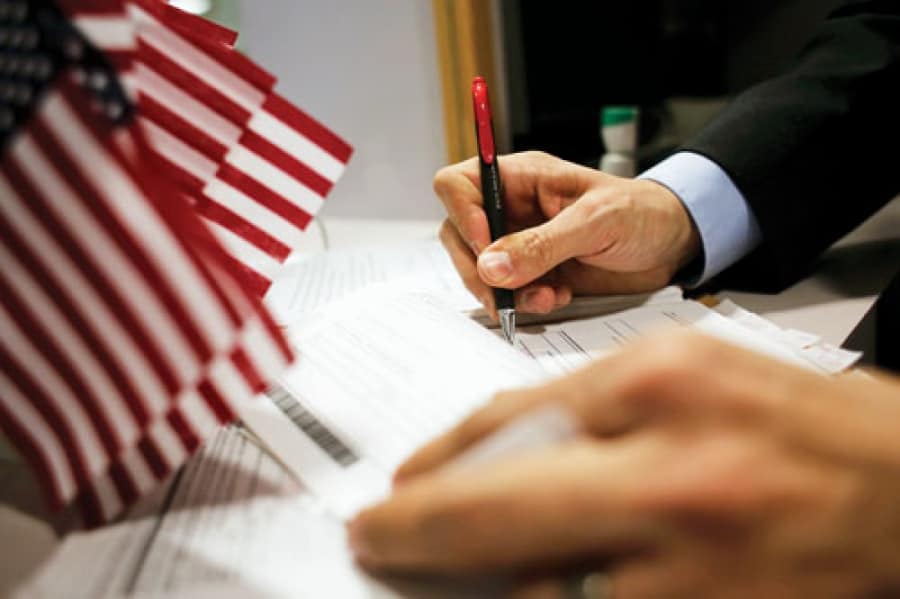
N-400 interview, civics, reading, and writing practice

Focus on the skills you need in the interview: understand English questions, answer briefly and confidently, review weak areas, build basic Reading/Writing readiness, and move into a mock test when ready.

128Civics questions 20mock questions 12to pass

What this tool helps you prepare for the US citizenship test

Use these practice modes to prepare for the latest US citizenship test, the N-400 interview, the 128 civics questions, and the English Reading/Writing portions, with a clearer study flow for Vietnamese speakers before the naturalization interview.

  1. 01

    Mock interview flow

    Use the 20-question mock test to prepare for the latest US citizenship test format and understand the 12-correct passing target.

  2. 02

    Voice answers

    Practice short spoken answers for civics questions so the N-400 interview feels less mechanical and more familiar.

  3. 03

    Vietnamese support

    Read Vietnamese explanations while still training with English questions and answers used during naturalization practice.

  4. 04

    Reading and Writing

    Practice English reading and writing sentences separately instead of only memorizing the 128 civics questions.

  5. 05

    Weak question review

    Save weak civics questions in your browser and return to them before starting another US citizenship practice test.

  6. 06

    Privacy first

    Audio practice runs in the browser. The website does not store voice files, transcripts, or interview practice answers on the server.

A practical study path for the citizenship test

A good routine balances memorization, English listening, spoken answers, and review. This is especially useful for Vietnamese speakers preparing for naturalization after the 2025 civics change.

01

Confirm the right question set for the interview

Applicants filing Form N-400 on or after October 20, 2025 use the 2025 Naturalization Civics Test. That is why this latest US citizenship test page focuses on the 128-question bank instead of the older 100-question version. Check your filing date before studying, then follow the correct question set so you do not waste time preparing with the wrong version.

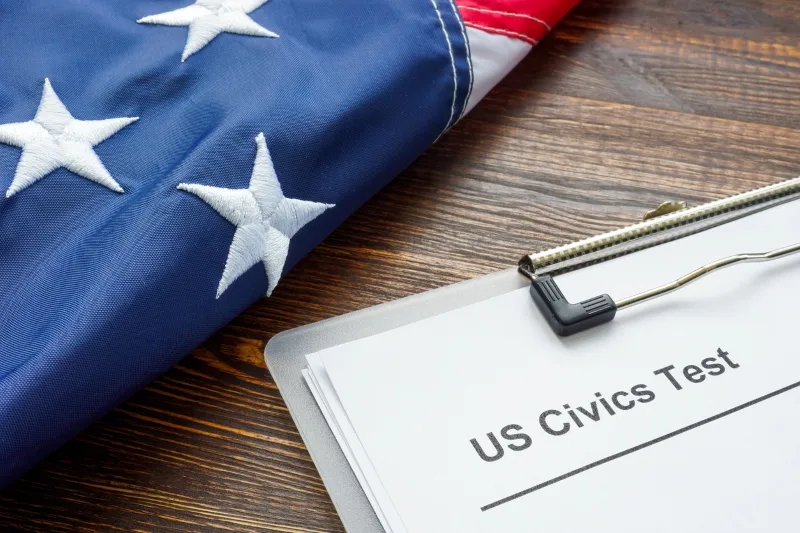
02

Study by topic to remember ideas, not just question numbers

Group the civics questions by principles of American democracy, U.S. government, rights and responsibilities, American history, geography, symbols, and holidays so the answers make sense. Studying by topic helps you remember the main ideas, connect related questions, and answer more naturally during the interview.

03

Practice short, clear, and confident English answers

Many accepted answers can be short. For Vietnamese speakers practicing for the US citizenship test, the practical goal is to understand the question, choose one correct answer, and say it clearly. Prioritize answers that are easy to pronounce, accurate, not too long, and confident enough to say to the officer when asked in a real interview setting.

04

Take a mock test after carefully reviewing weak questions

After reviewing weak questions, use a 20-question US citizenship mock test to check readiness. A mock test works best after real practice, not random guessing. If you still miss many answers or answer slowly, return to your weak-question groups before starting the next test so progress is easier to track.

What the current naturalization test includes

The civics portion changed for applicants filing on or after October 20, 2025, but the naturalization interview still checks English speaking, reading, writing, and your N-400 information.

Naturalization ceremony illustrating the US citizenship test journey

Speaking / N-400 interview

The Speaking portion runs throughout the naturalization interview: the officer greets you, confirms your identity, asks you to swear to tell the truth, and reviews some information from Form N-400. This is not a long speech test, but you need to understand basic questions about your name, address, residence history, work, travel outside the United States, taxes, and eligibility so you can answer briefly and truthfully.

Reading

The Reading test usually asks you to read one simple English sentence from a screen or paper. The content often uses civics vocabulary such as government, citizen, president, state, vote, and taxes; the goal is to read the key words in a short sentence clearly, not to translate or explain the full meaning.

Writing

The Writing test usually means listening to one sentence from the officer and writing it back in English. Some small mistakes may be considered in context, but you should be comfortable with capitalization, basic punctuation, and common USCIS citizenship test vocabulary so your sentence is complete and easy to read.

Civics 2025

The Civics portion is an oral part of the 2025 Naturalization Civics Test. The officer selects questions from the official 128-question bank, asks up to 20 questions, and stops when you reach 12 correct answers or can no longer pass. Some answers about current officials, representatives, or your state should be checked again close to the interview date.

Common mistakes to avoid

These mistakes make citizenship test preparation harder than it needs to be, especially when switching from the old civics test to the 2025 version.

Using the wrong civics version for your case

Studying only the old 100-question test can leave gaps if your N-400 filing date requires the current 2025 Naturalization Civics Test.

Relying only on Vietnamese translations to study

Vietnamese translations help you understand the meaning, but the interview still requires English listening, understanding the question, and answering briefly in English.

Ignoring current-official answers that may change

Questions about representatives, governors, senators, or current officials can change after elections, appointments, or new updates.

Studying civics while skipping Reading/Writing

Civics is important, but the naturalization interview also checks English reading, writing, and N-400 vocabulary.

Practical interview tips

The real interview is oral and personal. A useful citizenship test study plan should train your listening, short spoken answers, and current-official information.

  • Practice speaking out loud every day so English civics answers become easier to recall under pressure.
  • For questions with many accepted answers, learn one short answer first before expanding to other options.
  • Review weak questions repeatedly before adding more new questions to your study routine, especially history, government, and rights questions.
  • For current officials and state answers, verify USCIS.gov close to your interview date because names can change.
  • If you do not understand a question, you may ask the officer to repeat it or speak more slowly.

Skills to practice before the interview

People often search for citizenship test practice because they know the civics answers but still feel unsure about speaking, reading, writing, and N-400 interview vocabulary.

Civics knowledge

The civics part is not just memorization. You should know the meaning behind common answers about the Constitution, branches of government, voting, rights, responsibilities, and U.S. history.

  • Review the 128 questions in small groups.
  • Mark current-official answers that can change.
  • Repeat weak questions before taking another mock test.

N-400 interview vocabulary

The officer may ask about your application, travel, work, family, taxes, addresses, and eligibility. Simple English interview vocabulary helps you answer without panic.

  • Practice common yes/no questions.
  • Keep answers short and truthful.
  • Review dates, trips, and basic personal information.

English reading and writing

Reading and Writing are separate from civics. A strong study routine includes short sentences, dictation, and citizenship words that often appear in the English test.

  • Read sentences out loud.
  • Listen once, then type what you heard.
  • Correct missing or incorrect words before moving on.

FAQ

Answers to common questions about preparing for the US citizenship test, from the 2025 128-question civics test and N-400 interview to the 20-question mock test, Reading, Writing, and voice-answer practice.

Under the USCIS 2025 Naturalization Civics Test, the civics portion uses an official bank of 128 questions. During the naturalization interview, the officer orally asks up to 20 questions from this 128-question set. When preparing for the latest US citizenship test, study the 128 questions, listen to the questions in English, and practice short spoken answers instead of only reading the Vietnamese translation.

For the standard 2025 civics test, you need 12 correct answers out of up to 20 questions to pass the civics portion. The officer may stop once you have 12 correct answers, or when your incorrect answers mean you can no longer pass. In the 20-question mock citizenship test on this site, the practice goal is also 12 correct answers so you become familiar with the scoring before your interview.

USCIS applies the 2025 Naturalization Civics Test to applicants who file Form N-400 on or after October 20, 2025. If you filed N-400 after that date, studying only the older 100-question set may leave gaps. Check your filing date, interview notice, and USCIS before studying so you know you are practicing the correct version of the US citizenship test.

No. The naturalization interview usually includes officer questions about your Form N-400, a speaking check through how you understand and answer in English, then Reading, Writing, and Civics. A useful US citizenship test study plan should include the 128 civics questions, N-400 interview vocabulary, voice-answer practice, short English reading sentences, and dictation-style writing practice.

Yes. Civics is very important, but Reading and Writing are separate skills in the naturalization test. You may know many civics answers and still feel unsure when reading an English sentence or listening to the officer and writing it back. Reading/Writing practice helps you become familiar with common citizenship test vocabulary such as government, citizen, vote, taxes, state, and short English sentences used in the interview context.

Yes. Most interaction in the interview happens through spoken questions and answers. Voice-answer practice helps you listen to the English question, choose an accepted answer, and speak more clearly. The tool does not replace the USCIS officer's decision, but it can help Vietnamese speakers prepare for the speaking portion, avoid relying only on text, and build faster recall while practicing the 128 civics questions.

If you are 65 or older and have been a lawful permanent resident for at least 20 years, USCIS provides 65/20 special consideration for the civics portion. This group is usually asked 10 questions from a selected list of 20 and needs 6 correct answers. However, eligibility depends on your case, so check USCIS guidance or your application helper before studying only in 65/20 mode.

Yes. Some US citizenship test answers change by date, state, or congressional district, such as the president, governor, senators, U.S. representative, or other current officials. During practice, you can save current answers in the tool, but before the interview you should verify them again on USCIS.gov or another official source so you do not answer with outdated information.

Vietnamese explanations are very helpful for understanding questions and answers, especially for Vietnamese speakers beginning US citizenship test practice. However, the interview generally requires listening and answering in English unless you qualify for a valid exemption or exception. A stronger approach is to use Vietnamese explanations for meaning, then practice the questions and answers in short, clear English that is easy to pronounce and accurate.

Preparation time depends on your English level and schedule, but it is better to start early enough that you are not only memorizing answers. A practical routine is to review the 128 civics questions by topic, mark weak questions, practice speaking every day, add Reading/Writing practice, and take a 20-question mock test once you have a foundation. If your interview is close, prioritize weak questions, current-official answers, and topics you often confuse.

No. The website does not store audio files, transcripts, or interview practice answers on the server. Audio practice runs in the browser to support listening, speaking, and transcript comparison while you study. Some browsers or operating systems may use a platform service to create transcripts, so if microphone support is limited on your device, you can still type your answer to practice.

No. This is an independent practice tool for Vietnamese speakers preparing for the US citizenship test. It is not an official USCIS website and does not provide legal advice. The content supports practice for the 2025 Naturalization Civics Test, the N-400 interview, Reading, Writing, and mock testing, but you should still check USCIS.gov before your interview to confirm the test version, current answers, and requirements that apply to your case.

Official sources

The information in this US citizenship test practice tool is cross-checked against USCIS materials about the 2025 Naturalization Civics Test, the naturalization interview, answer updates, and exceptions such as 65/20.

For practice only. This is not an official USCIS website and is not legal advice. Before your interview, check USCIS.gov again to confirm the test version, current answers, and requirements that apply to your case.

Loading...